

Selling a WordPress business is not the same as selling a WordPress website. A buyer may be interested in your plugin’s code, recurring license revenue, customer relationships, brand, distribution channels, or the agency team that keeps everything running.
If you own a profitable WordPress plugin, a theme business, or a development agency, you don’t necessarily need to shut it down when you’re ready to move on. You can sell the entire business, transfer selected products, negotiate a revenue-sharing arrangement, or find a partner to take over development.
The right approach depends on what you own, how much the business earns, and what can realistically be transferred to another operator.
This guide explains how to evaluate your WordPress business, estimate its value, find suitable buyers, prepare for due diligence, and complete the handover without putting your customers at unnecessary risk.
What exactly can you sell?
Before looking for buyers, establish what you are offering. WordPress businesses have different assets and business models, so an acquisition that works for a plugin developer may not work for an agency owner.
| Business type | What a buyer may acquire | Main consideration |
|---|---|---|
| Premium WordPress plugin | Source code, intellectual property rights, brand, website, commercial licenses, customer relationships and update infrastructure | Renewal revenue and transferability |
| WordPress theme business | Theme code, design assets, demo sites, documentation, trademarks and distribution channels | Compatibility, support costs and product demand |
| WordPress development agency | Client contracts, recurring retainers, brand, processes and potentially employees | Client retention and dependence on the founder |
| WooCommerce extension business | Extension code, commercial customers, support infrastructure and integration knowledge | Platform compatibility and maintenance requirements |
| Free WordPress.org plugin | Project stewardship, eligible rights, repository ownership, brand and related assets | Active users and realistic monetization opportunities |
| Mixed WordPress business | A combination of software products, service contracts and digital assets | Separating assets that can be transferred from those that cannot |
Owning the source code does not automatically mean you can sell every component associated with it. Third-party libraries, licensed images, trademarks, customer contracts, marketplace accounts and personal information may have separate restrictions.
A buyer will want to establish exactly which rights and operational capabilities are included.
Selling a product versus selling the entire company
An asset sale transfers specified assets, such as a plugin, domain name, intellectual property rights and associated contracts. The seller may retain the original legal entity and other products.
A share or equity sale transfers ownership of a company or an ownership interest in it, usually with a different set of liabilities, approvals and tax consequences.
For a developer with several plugins, selling one product can be more practical than selling the entire company. An agency owner might instead prefer a complete business sale, especially when its staff, client contracts and operating systems are closely connected.
The structure should be reviewed with qualified legal and tax advisers before an agreement is signed.
How much is a WordPress plugin business worth in 2026?
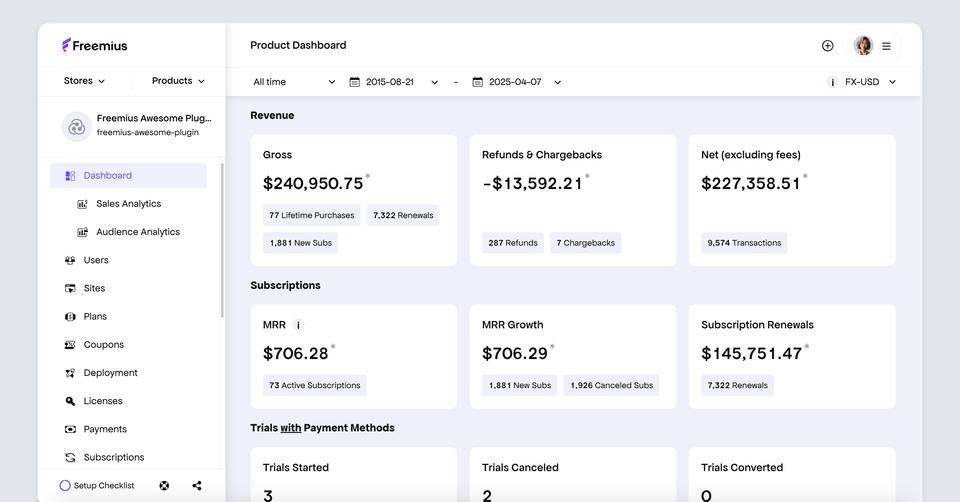
A WordPress plugin business is usually valued based on its ability to generate sustainable future earnings.
Active installs, downloads, traffic and brand recognition can strengthen an offer, but none automatically translates into a particular selling price.
Buyers commonly investigate revenue, profitability, growth, renewal rates, customer retention, development costs and operational risks.
Two financial approaches frequently appear in acquisition discussions.
Profit-based valuation
An indicative valuation can be calculated by multiplying normalized annual profit by an assumed multiple.
For example, consider a hypothetical WordPress plugin business:
| Financial metric | Annual amount |
|---|---|
| Gross sales | $60,000 |
| Refunds and discounts | -$2,000 |
| Marketplace and payment fees | -$8,000 |
| Hosting, tools and infrastructure | -$3,000 |
| Support and contractor expenses | -$7,000 |
| Normalized annual profit | $40,000 |
Using illustrative profit multiples:
| Assumed multiple | Indicative business value |
|---|---|
| 2× annual profit | $80,000 |
| 2.5× annual profit | $100,000 |
| 3× annual profit | $120,000 |
These are calculations, not sale-price predictions or a statement of prevailing market multiples. They also assume the $40,000 profit includes a reasonable adjustment for the work required to operate the business.
If the founder currently provides 20 hours of unpaid support every week, a buyer may need to hire someone to replace that work. Ignoring this expense could substantially overstate the business’s maintainable profit.
Revenue-based valuation
Some software buyers also assess annual revenue multiples, particularly when comparing subscription businesses with strong margins.
However, revenue multiples and profit multiples are not interchangeable. A plugin with $100,000 in annual sales and extensive development obligations may be worth less than a smaller plugin generating predictable earnings with minimal maintenance.
WordPress-focused acquisition marketplace FlipWP has discussed plugin valuations in terms of annual revenue, while other marketplaces present annual profit multiples. The correct comparison depends on which financial measure is being used.
Real WordPress business sale examples
In a published case study, Flippa documented the acquisition of EssentialPlugin, a portfolio of WordPress plugins.
The reported figures included $91,667 in 2024 annual revenue, a 76% profit margin and a six-figure sale price. Flippa also reported that the selected buyer’s offer was 30% higher than an earlier offer.
The exact final transaction price was not disclosed, so the case cannot establish a precise sale multiple.
It does, however, demonstrate that buyers may value an established product portfolio, distribution, customer relationships and growth opportunities together.
Another useful resource is WPAcquire’s public listing directory, which shows asking prices and reported financial performance for WordPress-related businesses.
Remember that asking prices are not completed sale prices. They are useful reference points, not proof of what a buyer will pay.
What makes a WordPress business more valuable?
The business’s saleability often matters as much as its current profit.
Recurring revenue and renewal performance
A plugin earning $5,000 every month from stable subscription renewals has a different risk profile from one earning the same amount through unpredictable lifetime-license purchases.
Buyers will want to know how much revenue comes from new customers, renewals, upgrades and one-time sales.
They may also investigate churn, failed renewal payments, refunds and whether the underlying subscriptions can be transferred.
Calculate renewal performance using clearly defined cohorts. Do not combine customers with different billing periods without explaining the calculation.
Reduced dependence on the owner
An agency where every important client insists on speaking to the founder may be difficult to sell.
The same applies to a plugin with undocumented code, manual licensing processes and support issues only the original developer knows how to solve.
Documenting procedures, resolving recurring bugs and establishing reliable support workflows can make the business easier to operate after an acquisition.
Diversified customer acquisition
A plugin selling exclusively through one marketplace is exposed to that marketplace’s traffic, fees, policies and account rules.
A business attracting customers through several channels may be more resilient, particularly if it maintains its own website and customer relationships.
However, the buyer must verify that those channels and relationships are transferable.
Maintainable code and limited technical debt
A buyer of a WordPress product needs to understand what it will cost to maintain.
Security vulnerabilities, deprecated PHP functionality, unsupported dependencies and fragile integrations create additional liabilities.
A documented, testable codebase with an established release process is easier to evaluate than an undocumented collection of patches.
How to prepare your WordPress business for sale
Preparation should begin before you contact buyers. Even if you’re only exploring a possible sale, having the following information ready makes discussions more productive.
1. Organize your financial records
Prepare at least 12 months of reliable financial information, preferably longer if available.
Separate gross sales, refunds, taxes collected on behalf of authorities, payment fees, marketplace commissions, advertising costs, infrastructure expenses and support costs.
For agencies, separate recurring maintenance retainers from project-based revenue. Identify major clients and the share of revenue each contributes.
Do not present gross sales as profit or annualize a single unusually successful month without explaining the limitation.
2. Document your software and infrastructure
For WordPress plugin and theme businesses, prepare a technical inventory covering the product repository, release history, build process, licensing infrastructure and hosting dependencies.
A prospective buyer may need to review:
- Supported WordPress and PHP versions, with a clear testing policy.
- All required plugins, libraries, APIs and paid third-party services.
- Deployment and update processes.
- License-key issuance, validation, activation and renewal systems.
- Recurring background jobs, webhooks and external integrations.
- Known security issues, bugs and outstanding maintenance requirements.
- Support volume, documentation and customer-facing obligations.
For example, a WooCommerce plugin integrating with a payment provider may contain production webhooks, encrypted credentials and customer-specific settings. These cannot simply be copied to a new server without a migration plan and appropriate authorization.
A clean transfer should avoid exposing private customer data or operational credentials during preliminary buyer discussions.
3. Review intellectual property ownership
Confirm that the business holds the rights needed for the proposed transaction.
Check contractor agreements, code contributions, design assets, fonts, third-party libraries, trademarks, domains and any components licensed from other developers.
The GPL licensing model commonly used in WordPress does not eliminate the need to verify ownership or comply with license obligations.
A buyer should understand which rights are being assigned and which permissions already exist under open-source licenses.
4. Make the business less dependent on you
An owner who handles sales, support, development, server administration and licensing personally creates a significant transition challenge.
Improve the handover by documenting recurring tasks, creating a reliable backup and recovery process, and identifying the most important operational contacts.
For an agency, document client onboarding, billing, project delivery, maintenance procedures and renewal workflows.
5. Prepare a confidential business summary
You don’t need to disclose customer details or proprietary source code in your first contact with a buyer.
A useful initial summary describes the business category, age, revenue model, approximate financial performance, products, traffic sources, owner involvement and reason for considering a sale.
Detailed financial statements, contracts, repositories and customer information can be shared through a staged due-diligence process with appropriate confidentiality and security protections.
Where can you sell a WordPress plugin business or agency?
There is no single best acquisition channel for every business.
| Option | Potential advantage | Main limitation |
|---|---|---|
| Direct sale to another WordPress company | A buyer familiar with your customers and technology may recognize strategic value | Identifying and qualifying suitable buyers takes effort |
| Flippa | Broad marketplace for digital assets and online businesses, including WordPress plugins | Fees, competition and buyer qualification require consideration |
| FlipWP | WordPress-focused buyer audience | More specialized audience than broad acquisition marketplaces |
| WPAcquire | WordPress-focused listings with publicly visible financial figures | Listing visibility does not guarantee an offer |
| Acquire.com | Wider online business acquisition ecosystem | Suitability depends on business type, size and eligibility |
| Business broker or M&A adviser | Assistance with valuation, negotiations, due diligence and finding buyers | Advisory fees and possible minimum deal requirements |
| Direct acquisition or revenue-sharing arrangement | Can accommodate a sale of selected products or negotiated operating partnership | Terms depend on the specific buyer and agreement |
Always check each service’s current eligibility rules, transaction fees and available assistance before listing. A platform’s advertised valuation or asking price is not a guaranteed outcome.
Is a direct acquisition better than a marketplace listing?
A direct sale may make sense when another company already serves the same customer base.
For example, a WordPress booking plugin may be attractive to a booking-service provider, while a WooCommerce extension could appeal to an established ecommerce software vendor.
Such buyers may value product synergies that are not reflected in a simple profit multiple.
However, a direct buyer should still be evaluated carefully. Request evidence of their ability to complete the purchase, understand their plans for existing customers and compare the full terms rather than focusing solely on the headline price.
Should you sell the business outright or negotiate revenue sharing?
A complete sale is not the only possibility.
For developers who no longer have time to maintain a product, a partial asset transfer, licensing arrangement or revenue-sharing partnership may be worth considering.
Full acquisition
The buyer acquires the agreed assets or ownership interests in exchange for the negotiated consideration.
This may be appropriate when you want to exit development and customer support entirely.
The agreement should define ongoing obligations, warranties, payment terms, and any restrictions on competing products.
Revenue-sharing partnership
A partner may take responsibility for development, distribution, marketing or support while the original owner receives a negotiated share of future revenue.
The arrangement should define which revenue counts, whether the share applies before or after specified expenses, how refunds are treated, what reporting is available, and how the agreement can end.
A promise of a percentage of revenue is not meaningful without these definitions.
Earn-out or staged acquisition
Some transactions combine an upfront payment with additional consideration tied to future performance or completion of agreed milestones.
For example, consider a purely hypothetical offer involving a $30,000 payment at closing plus an additional $20,000 if specified revenue targets are met.
The total potential consideration would be $50,000, but only $30,000 would be payable unconditionally at closing under those assumed terms.
Sellers should evaluate the likelihood of additional payments, who controls the business after closing and how the targets will be measured.
Selling only part of the portfolio
If you maintain several unrelated WordPress plugins, selling one product can reduce your support responsibilities while allowing you to continue operating your other products.
This can be particularly attractive when the plugin has an established customer base but no longer fits your development priorities.
The practical challenge is separating shared assets, billing systems, code and support infrastructure so the buyer can operate the acquired product independently.
How to sell a WordPress agency
Agencies have acquisition risks that software product businesses do not.
A buyer may be purchasing relationships with recurring maintenance clients, a skilled development team, predictable contract revenue and established delivery processes.
The central question is whether those relationships and operations will survive the change in ownership.
Calculate maintainable agency earnings
Consider a hypothetical agency generating $240,000 in annual revenue from maintenance retainers and development work.
If its operating expenses, including an appropriate allowance for replacing the founder’s day-to-day work, total $180,000, its normalized operating earnings are $60,000.
At an illustrative 3× earnings multiple, the indicated value would be $180,000.
That calculation is not an appraisal. Actual offers depend on factors such as client concentration, team continuity, growth, contractual restrictions, revenue composition and working capital.
Review contracts and client concentration
An agency with 40 customers is not necessarily less risky than one with 10.
If a single customer contributes half its revenue, the loss of that account could materially change its value.
Review termination provisions, assignment clauses, change-of-control requirements, subcontractor relationships and any customer consent obligations.
Some service agreements may not transfer automatically to a buyer.
Separate the agency from the founder
A potential acquirer needs to know who will manage customers, deliver projects, maintain WordPress sites and resolve urgent incidents after closing.
Establishing documented processes and capable team members can improve confidence in the transition.
The goal is not to make the founder irrelevant. It is to make continuity possible without requiring indefinite founder involvement.
WordPress-specific due diligence: what buyers should inspect
A successful WordPress acquisition requires more than reviewing a profit-and-loss statement.
WordPress.org plugin ownership
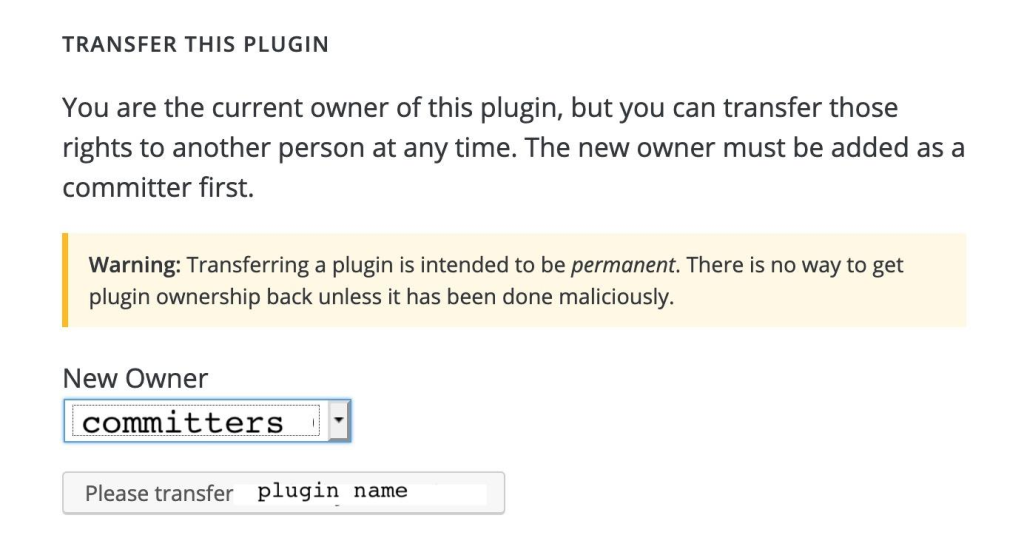
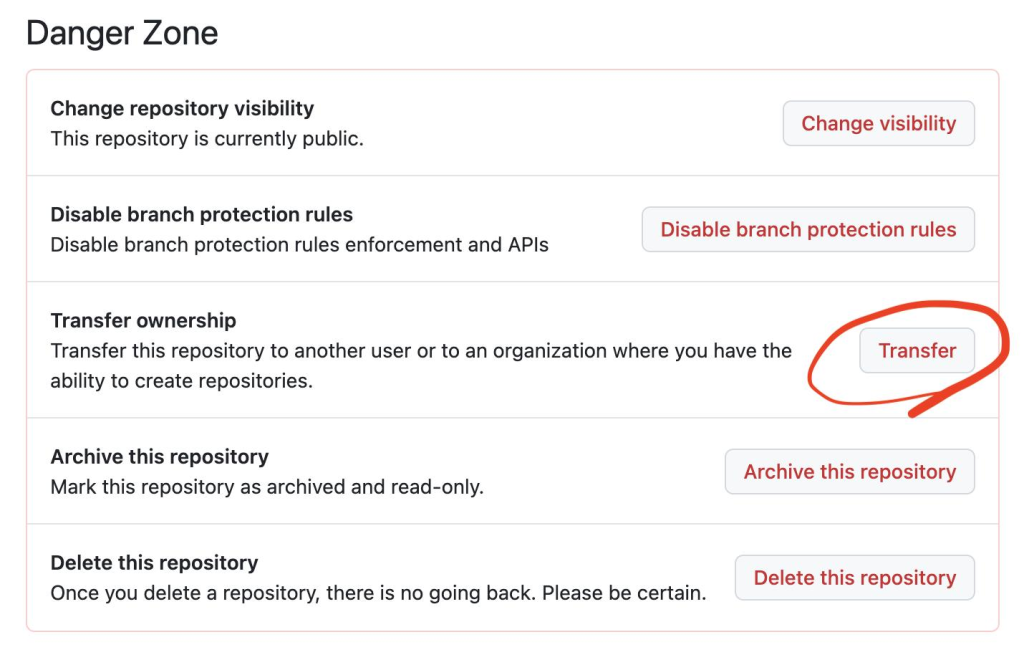
If a plugin is published in the official WordPress.org directory, ownership should be transferred through the official process.
According to the WordPress Plugin Developer Handbook, plugins below the relevant 10,000-user threshold can generally be transferred by adding the new owner as a committer and using the transfer option in the plugin’s Advanced section.
Plugins with more than 10,000 users, as well as certain featured or beta plugins, require involvement from the WordPress.org Plugins Team.
Do not confuse adding a committer with completing an ownership transfer.
WordPress.org also explicitly warns developers to vet prospective acquirers carefully. An ownership change must not become an opportunity for deceptive tracking, spam or other practices that put existing users at risk.
Premium licensing and subscriptions
A premium plugin’s commercial operation may depend on WooCommerce, Easy Digital Downloads, Freemius, a custom licensing server or a third-party marketplace.
The buyer must understand how existing licenses will remain valid, whether subscriptions and payment arrangements can be migrated, and whether the original seller has any ongoing obligations.
Payment accounts and recurring billing agreements should never be assumed transferable without confirmation from the relevant provider.
Where direct migration is unavailable, the parties may need an approved transition process that avoids disrupting existing customers.
Code repositories and release infrastructure
A professional handover should cover the authoritative repository, source code, commit history, build instructions, deployment credentials and production update infrastructure.
The buyer should be able to reproduce a release without needing access to the seller’s personal computer.
Sensitive credentials should be rotated or replaced through a controlled transition rather than copied into documentation.
Customer privacy and data protection
Customer information should not be treated as an unrestricted asset.
For businesses processing personal data under the GDPR, acquisition planning must account for the appropriate legal basis, transparency requirements, security, data minimization, and any rules governing transfers outside the European Economic Area.
The European Data Protection Board provides guidance on international data transfers.
Personal data should only be shared with prospective buyers when there is a lawful basis and appropriate safeguards. Obtain qualified advice before transferring customer databases.
Domains, websites and infrastructure
Create an inventory of the domain registrar, DNS, CDN, hosting, email, analytics, source repositories, payment providers, software subscriptions and customer support systems.
Define which assets move, which must be recreated and which will remain under the seller’s control temporarily.
Also establish rollback and contingency plans for migrations that could interrupt software updates or license validation.
The WordPress acquisition process, step by step
Step 1: Decide what you want to sell. Establish whether you are offering a product, asset bundle, agency or entire company.
Step 2: Prepare a realistic valuation. Use verified historical financials, documented costs and comparable businesses, with careful attention to whether comparisons use revenue or profit.
Step 3: Find suitable buyers. Contact strategically relevant companies, investigate specialist marketplaces or consult an acquisition adviser.
Step 4: Qualify potential acquirers. Establish identity, credibility, relevant operating experience and ability to fund the transaction.
Step 5: Negotiate preliminary terms. Agree on the proposed assets, price, payment structure, expected transition and conditions for proceeding. An initial letter of intent may be nonbinding in some respects and binding in others.
Step 6: Complete due diligence. Provide verified financial, contractual and technical information through an appropriately secured process.
Step 7: Sign the definitive agreement. Work with legal and tax professionals to document asset transfers, warranties, liabilities, confidentiality, payment conditions and transition responsibilities.
Step 8: Secure payment and transfer the assets. For applicable transactions, a properly structured escrow arrangement can reduce payment and delivery risk. Escrow.com explains its domain transfer process, but a complete business acquisition may require a more comprehensive agreement and transaction structure.
Step 9: Complete the technical handover. Transfer agreed repositories, domains, operational systems, contracts and platform access using a documented checklist.
Step 10: Maintain customer continuity. Communicate ownership changes appropriately, preserve support and update availability, and complete any agreed post-sale assistance.
The timetable depends on the size of the business, complexity of the assets, buyer readiness, financing and legal requirements. Avoid relying on a promised closing date until the relevant conditions have been satisfied.
Common mistakes when selling a WordPress business
One mistake is pricing a plugin solely by its active installation count. Installations can demonstrate reach, but buyers also need a viable strategy for supporting and monetizing those users.
Another is failing to account for unpaid founder labor. A profitable-looking product may require substantial development and support work that becomes a real expense once the original developer leaves.
Owners also underestimate the challenges of transferring recurring payments, licensing infrastructure, third-party accounts and customer contracts.
For agencies, the biggest risk is frequently client continuity. If the sale depends on customers who are free to leave immediately, the buyer will consider that risk when negotiating.
Finally, sellers sometimes accept an attractive headline valuation without evaluating deferred payments, earn-outs, warranties, escrow conditions or transition obligations.
Compare the whole agreement, not just the maximum potential price.
Can you sell a WordPress plugin that is no longer profitable?
Yes, but the business may be valued differently.
An unprofitable or discontinued plugin may still have value through its source code, documented functionality, established brand, user base, intellectual property or integration with another company’s product portfolio.
However, buyers also inherit the technical work required to maintain and improve the software.
A free plugin with thousands of installations is not automatically a valuable acquisition. Its value depends on the product, the condition of the code, the users’ needs, ongoing obligations and the buyer’s realistic plans.
If commercial interest is limited, an approved transfer to another maintainer may be more appropriate than an outright sale.
For plugins in the WordPress.org directory, the official adoption and takeover process explains the rules and responsibilities involved.
Considering a sale or partnership through WPBay?
WPBay is a marketplace for WordPress plugins, themes and related software. In addition to ordinary software listings, WPBay also invites discussions about plugin and theme acquisitions, development takeovers and revenue-sharing arrangements.
For owners of a product that is difficult to maintain, no longer aligned with their priorities, or ready for a new distribution channel, a structured partnership may be worth exploring.
These discussions are distinct from a normal marketplace product listing. An inquiry does not guarantee that WPBay will make an offer, acquire the product or find a buyer.
If you’re considering an exit, start by preparing a short summary of the product, its development history, financial performance where applicable, current maintenance requirements and what you would like to achieve.
Explore WordPress Plugin and Theme Acquisition Opportunities on WPBay
Agency owners can also use the valuation and preparation principles in this guide when evaluating a sale to a suitable third party. Any specific agency acquisition opportunity would need to be agreed separately.
Frequently asked questions
Can I sell a WordPress plugin while it is still listed on WordPress.org?
Yes. Commercial assets and eligible rights can be sold, and official repository ownership can be transferred through WordPress.org’s documented procedures. Buyers and sellers must respect the directory’s rules and the rights of existing users.
How much can I sell my WordPress plugin for?
There is no universal price. Sustainable earnings, revenue quality, growth, product condition, customer retention, owner dependence and buyer interest all affect valuation. A multiple-based estimate is a starting point rather than a guaranteed selling price.
Can I sell a free WordPress plugin?
A free plugin may have commercial value through its code, brand or established user base. However, a free directory listing does not automatically create proprietary rights over publicly licensed code or a transferable customer database.
Do I need a broker to sell my WordPress business?
No. Owners can approach potential buyers directly or use acquisition marketplaces. A broker may be useful for buyer outreach, negotiations and transaction coordination, particularly for larger or more complex sales.
Can I sell only one plugin from my business?
Yes, provided the relevant assets and rights can be separated and transferred. Shared licensing infrastructure, customer contracts, domains and payment systems can complicate the process.
Can I sell my WordPress agency without selling the company?
Potentially. An asset sale may include defined contracts, intellectual property and operating assets without transferring the legal entity. Contractual permissions, employee obligations, tax treatment and other legal considerations determine what is possible.
What happens to existing customers after a plugin acquisition?
The parties should agree on ongoing support, security maintenance, updates, licensing and appropriate customer communication. A responsible acquisition prioritizes uninterrupted service and compliance with existing obligations.
Is revenue sharing better than selling outright?
Neither arrangement is automatically better. An outright sale offers a more defined exit, while revenue sharing may provide continuing income but introduces ongoing dependence on the partner’s performance. The agreement’s terms and the seller’s objectives determine the better fit.
What I Learned From Acquiring a WordPress Theme
As the founder of WPBay, I’ve also experienced the acquisition process firsthand. I purchased the Avas WordPress theme, including its core plugin, demo content, documentation, and associated website assets.
One thing I learned is that buying a WordPress product involves much more than receiving a ZIP file. You need to verify that all the necessary assets are included, understand how the product works, and make sure you can independently maintain, update, and support it after the original developer steps away.
Using an escrow service helped structure the transaction and protect both parties during the transfer.
My advice to anyone selling a WordPress plugin or theme is simple: prepare your product as if someone else will need to manage it tomorrow. Clean code, complete documentation, organized assets, and a clear handover process can make the acquisition considerably smoother for everyone involved.
Final thoughts
A successful WordPress business sale is not simply a negotiation over code or monthly revenue. Buyers are looking for a business they can operate, maintain and grow without unexpected liabilities or disruptions.
For plugin owners, that means demonstrating sustainable earnings, maintainable code and a workable transfer of licensing and customer obligations.
For agency owners, it means proving that client relationships, services and operational processes can continue after the founder steps away.
Whether you choose a full acquisition, a partial product sale or a revenue-sharing partnership, preparing the business carefully gives both parties a stronger basis for a fair and sustainable agreement.
If you are exploring options for a plugin or theme business, you can also review WPBay’s acquisition and revenue-sharing opportunities.