


If you’re a WordPress developer looking to sell plugins or themes, two names come up repeatedly: Freemius and Envato.
At first glance, they seem like competitors. Both help developers make money from their products. Both handle payments. Both have thousands of developers using their platforms. But that’s where the similarities end.
The reality is that Freemius and Envato solve very different problems and understanding that difference is critical before choosing either one. I’ve spent years selling WordPress products, including on CodeCanyon, Envato’s plugin marketplace. I’ve also watched many developers move away from traditional marketplaces toward more independent business models. The reason is simple: once you start building a real software business, factors like customer ownership, recurring revenue, branding and control become just as important as making sales.
Let’s look at how Freemius and Envato compare.
What Is Freemius?
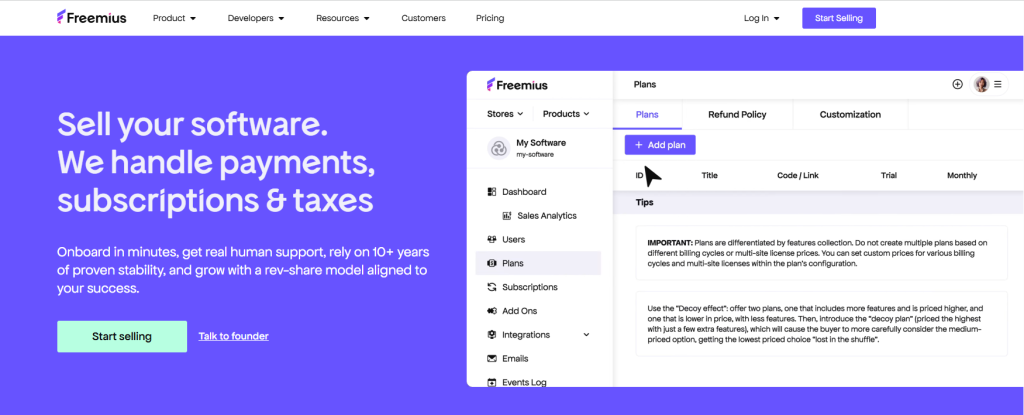
Freemius is a platform designed specifically for software developers. Rather than acting as a marketplace, it provides the infrastructure needed to sell WordPress plugins and themes directly.
Developers use the Freemius SDK to handle software licensing, automatic updates, subscriptions, payment processing, analytics, free-to-premium upgrades and customer management. In other words, Freemius gives developers the tools needed to run a software business without building those systems themselves. Freemius does not bring marketplace traffic in the same way Envato does. Instead, it helps developers monetize traffic they generate through their own websites, WordPress.org listings, marketing efforts, or existing audiences.
What Is Envato?
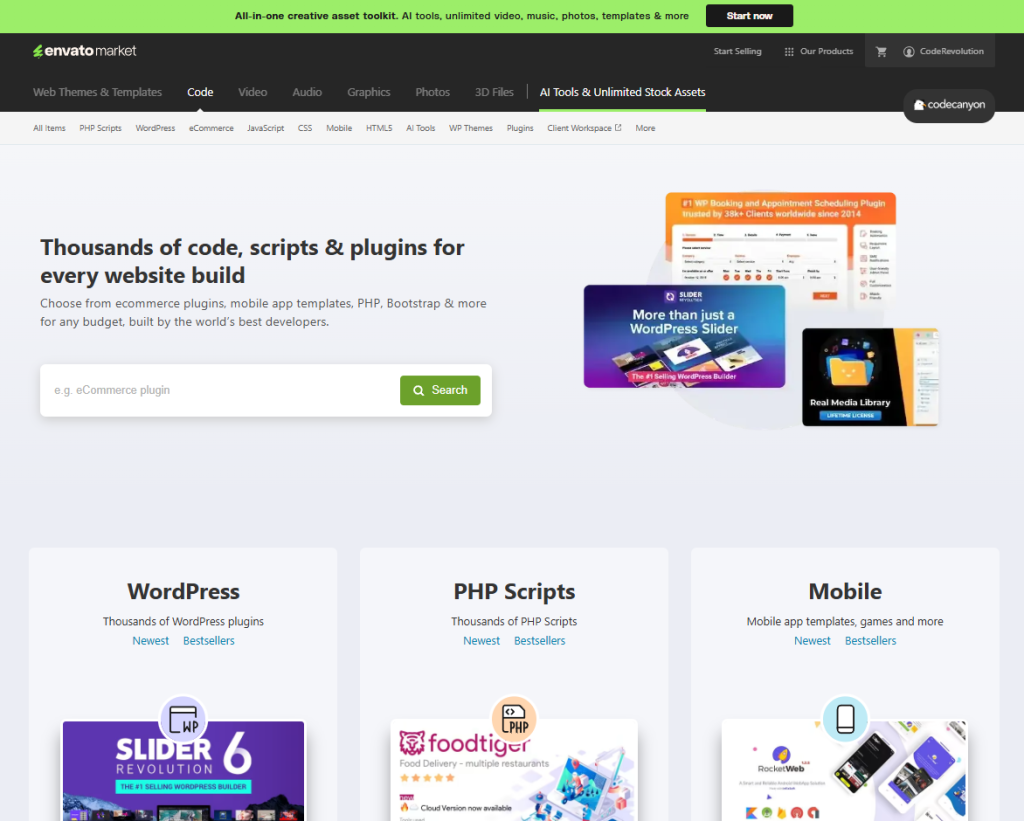
Envato is the company behind CodeCanyon and ThemeForest, two of the largest digital marketplaces in the world. Unlike Freemius, Envato’s main value is audience.
Millions of buyers already browse the platform looking for WordPress themes, plugins, templates, scripts, graphics and digital products. Instead of building your own audience, you’re placing your products in front of an existing marketplace. That’s why many developers choose Envato when they’re first starting out.
Getting your first sale is often easier when customers are already there. The tradeoff is that you’re operating inside Envato’s ecosystem and under Envato’s rules.
The Biggest Difference: Platform vs Marketplace
This is where most comparisons get it wrong. Freemius and Envato are not really direct competitors. Freemius is a platform. Envato is a marketplace. Freemius helps you build your own store. Envato provides a store that already exists.
That difference affects almost every aspect of your business. When you use Freemius, you’re responsible for generating traffic and attracting customers. The upside is that you’re building your own brand and creating direct relationships with buyers. When you use Envato, much of the discovery process is handled by the marketplace. The upside is visibility. The downside is that you’re one seller among thousands competing for attention.
Customer Ownership
This is often the deciding factor for experienced developers. When customers purchase through your own website using Freemius, they’re buying directly from you.
They subscribe to your email list + they become part of your ecosystem.
Over time, this creates a valuable business asset that extends far beyond a single product. With Envato, the customer relationship is different, much much differet…
Customers typically think of themselves as Envato customers first and customers of individual authors second. Many buyers return to CodeCanyon or ThemeForest because they trust the marketplace, not necessarily because they know a specific developer. For developers trying to build a long-term software company, that distinction matters.
Recurring Revenue and Subscriptions
One area where Freemius has a clear advantage is recurring revenue. Modern WordPress businesses increasingly rely on yearly subscriptions rather than one-time purchases.
Subscriptions create predictable revenue, improve business stability and make it easier to invest in product development. Freemius was built with recurring billing in mind. The platform includes subscription management, license renewals, upgrade paths and customer lifecycle tools that are designed specifically for software businesses.
Envato historically focused on one-time purchases. While the marketplace has evolved over time, it was never fundamentally designed around recurring software revenue in the same way that modern SaaS-oriented platforms are. For developers building long-term subscription businesses, this can be an important consideration.
Branding and Business Growth
One of the biggest challenges on large marketplaces is building a recognizable brand. You may have an excellent product. You may provide outstanding support.
You may have thousands of customers. Yet many buyers still primarily remember the marketplace itself. This is a common frustration among successful marketplace sellers. When you’re building through Freemius, your website, branding, messaging and customer experience remain under your control.
Every sale strengthens your own brand rather than someone else’s platform. That doesn’t make one approach right and the other wrong. It simply means they produce different long-term outcomes.
Getting Started
This is where Envato has historically had a strong advantage. For a developer with no audience, no website traffic and no marketing experience, a large marketplace can provide exposure that would otherwise be difficult to obtain. Publishing a product on CodeCanyon can put it in front of customers immediately.
That’s a powerful benefit.
Freemius doesn’t solve the traffic problem. You still need to attract visitors through SEO, content marketing, social media, paid advertising, partnerships, WordPress.org, referrals, or other marketing channels. Many developers underestimate how challenging that can be. The reality is that building traffic often takes longer than building the product itself.
Revenue Share and Costs
Both platforms charge for the value they provide. Envato takes a percentage of sales through marketplace commissions. Freemius also charges a percentage of revenue in exchange for licensing infrastructure, payment processing, subscriptions, analytics and related services. The important question isn’t which platform charges fees.
The important question is what you’re receiving in return. Envato’s value comes from audience and marketplace visibility. Freemius’ value comes from infrastructure and business automation. Understanding that distinction helps developers evaluate costs more realistically.
Which Platform Should You Choose?
For developers who already have traffic, an audience, a WordPress.org user base, or a strong marketing strategy, Freemius often makes a lot of sense, as it allows you to build direct customer relationships, establish your own brand and create a business that isn’t dependent on a single marketplace.
For developers who are just starting out and need exposure, Envato may still be an attractive option because it provides immediate access to an existing customer base and many successful developers have actually used both approaches at different stages of their journey.
They start on a marketplace, gain experience and customers, then gradually build more independent sales channels over time.
Final Thoughts
The choice between Freemius and Envato isn’t really about which platform is better. It’s about what kind of business you want to build.
If your primary goal is marketplace exposure and access to an established audience, Envato remains one of the largest platforms in the industry. If your goal is to build a long-term software business around your own brand, customer relationships and recurring revenue, Freemius offers a very different path.
Both approaches have produced successful WordPress businesses. The key is understanding the tradeoffs before you commit.
Because once your products, customers, licenses and revenue become tied to a particular platform, switching later becomes significantly more difficult than choosing carefully from the beginning.