


If you’re building a WordPress plugin and want to sell it, you’ll eventually end up comparing Freemius and Easy Digital Downloads. I’ve worked with both approaches over the years, and while they can achieve similar results, they solve very different problems.
The short version? Freemius is designed to help you start selling quickly. EDD is designed to give you complete control. The right choice depends on what kind of business you’re trying to build.
Why So Many Developers Choose Freemius
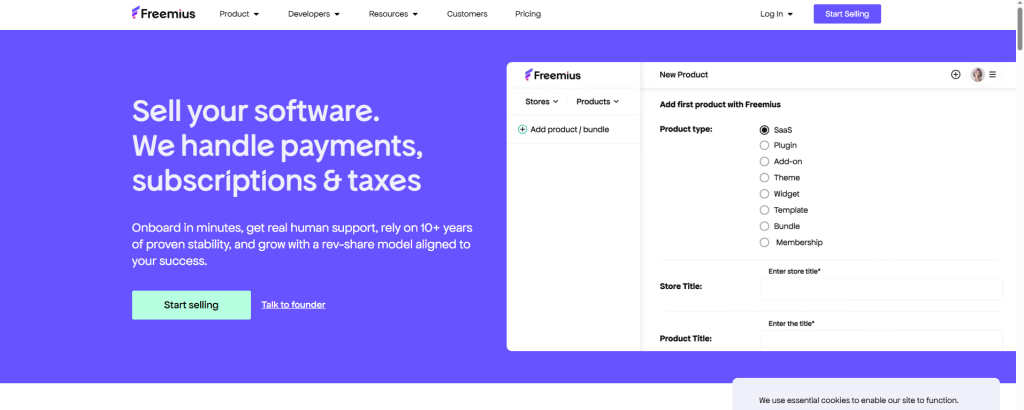
Let’s start with Freemius. The biggest reason developers choose Freemius is simple: it removes a huge amount of work. Instead of spending weeks setting up a store, integrating payment processors, configuring subscriptions, building a licensing system, testing update delivery, and handling all the little details that nobody talks about, you can integrate the Freemius SDK and start selling relatively quickly.
That’s incredibly appealing when your primary goal is building software. Most developers don’t wake up excited to configure Stripe webhooks or troubleshoot renewal payments. They want to write code and improve their products.
Freemius understands this and built a platform around that reality. For a solo developer launching their first premium plugin, it’s honestly a very attractive solution.
You get a checkout system, licensing, analytics, subscriptions, customer management, and software deployment infrastructure without having to build or maintain any of it yourself. In many ways, Freemius allows you to act like a larger software company without needing to hire a team. That’s a powerful advantage.
Why Developers Eventually Look at EDD
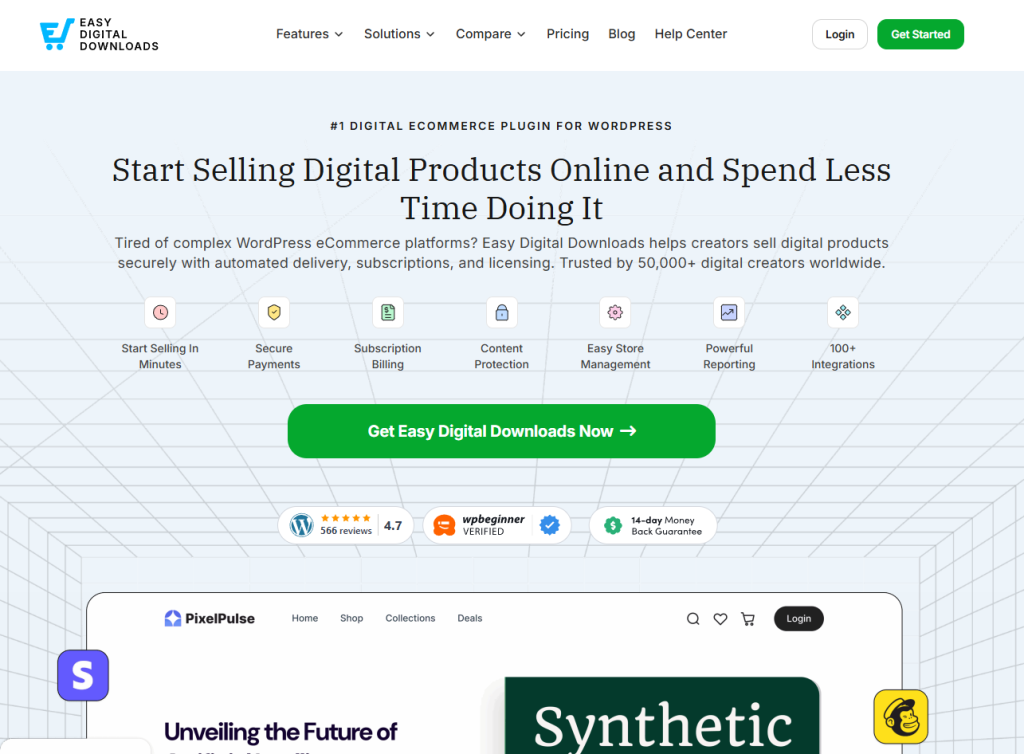
The interesting thing is that many developers who start with Freemius eventually begin looking at Easy Digital Downloads. Not because Freemius is bad. Usually because their business has grown.
When you’re making your first hundred dollars, convenience is everything. When you’re making thousands of dollars every month, ownership starts becoming more important. That’s where EDD enters the conversation. With Easy Digital Downloads, you’re not using someone else’s platform.
There are many advantages of this: you’re building your own,your website becomes your store, your checkout belongs to you, your customer database belongs to you, and most importantly, your branding belongs to you.
As a result, your business operates entirely under your control. For many developers, that’s a very appealing idea. There’s something satisfying about knowing that every part of your business exists on infrastructure you control. This means that nobody, excepting you, can suddenly change pricing. It is also a good point that nobody can modify policies. Nobody can decide how your checkout should work. You make those decisions.
The Hidden Cost of Complete Control
Of course, complete control comes with responsibilities. This is where many comparison articles become unrealistic. They make self-hosting sound free. Trust me on this: it isn’t.
Every experienced developer knows this, when you run an EDD store, you’re not just selling plugins anymore, but you’re running an ecommerce business. That means maintaining WordPress updates and maintaining server infrastructure + monitoring performance, also managing backup. Handling store security will also be a must, otherwise this will bite you after you grow. Also, there are some ugly things to do, like troubleshooting payment issues, keeping licensing systems working, managing email deliverability…
Overall, your job will become more or less “the one responsible for fixing things when they inevitably break”. Most of these tasks aren’t difficult, but some are… however, overall, the core problem is that they consume time and quite of lot of time.
And time is usually the most expensive thing a developer has. A lot of developers underestimate how much work goes into operating a successful self-hosted software business because they’re focused on the initial setup. The setup is the easy part. Maintaining everything for the next five years is where the real cost appears.
The Revenue Question
One of the most common arguments in these discussions revolves around fees. Freemius takes a percentage of your revenue, while EDD doesn’t. At least on paper.
This is where things become more nuanced than people often admit. Yes, when you sell through Freemius, part of every sale goes to Freemius. That’s the price you pay for convenience.
With EDD, you keep your revenue. But you’re paying for hosting, you’re paying for premium extensions, you’re paying for maintenance, you’re paying for development time, you’re paying for infrastructure, you’re paying for everything Freemius handles automatically.
The difference is that one model presents the cost as a percentage of revenue, while the other spreads the costs across many different areas of your business.
Trust me that neither option is free. They’re simply different ways of paying for the same problem.
The Customer Relationship
This is probably the most important factor for long-term businesses.
When you’re building a serious software company, customer relationships become incredibly valuable. Not just sales, but real customer relationships. Building a group of people who trust your products, people who buy future releases instantly, because they know you will not let them down.
These are also people who recommend your work, people who stay with you for years (if or if not, you offer them a subscription package). Note that with EDD, those relationships exist entirely within your own ecosystem: customers visit your website -> customers interact with your brand -> customers buy directly from you -> everything reinforces your company identity.
That’s a major advantage if you’re thinking long-term. Freemius still allows developers to build customer relationships, but a significant part of the customer experience runs through Freemius infrastructure. Some developers don’t care about that. Others care a lot. The answer depends on what you’re trying to build.
So Which One Is Better?
The truth is that both Freemius and Easy Digital Downloads are excellent products.
They simply solve different problems. If you’re a developer who wants the fastest route from idea to revenue, Freemius is extremely difficult to beat. It removes friction and allows you to focus almost entirely on your product. If you’re a developer who values independence, ownership, and complete control over every aspect of your business, EDD is probably the more attractive option.
Personally, I think the answer often changes as a business grows. A developer launching their first plugin may value convenience above everything else. A developer running a mature software business may value ownership above everything else.
Neither perspective is wrong. They’re simply different stages of the same journey. The important thing isn’t choosing the “best” platform. The important thing is choosing the platform that fits where your business is today and where you want it to be in the future.