


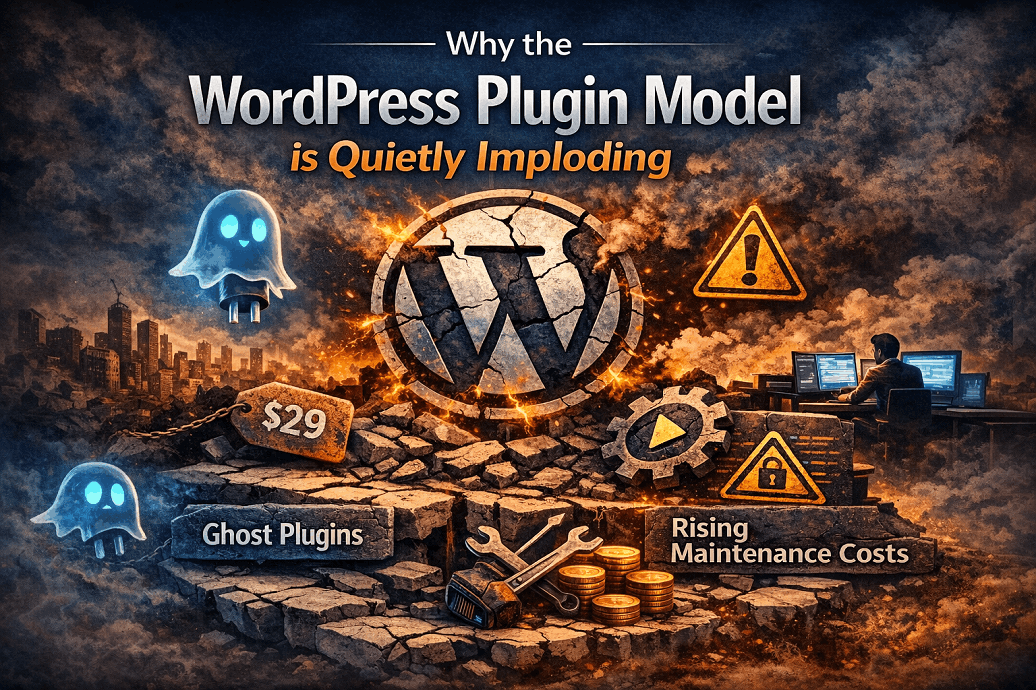
For a decade, the WordPress plugin economy felt bulletproof. The math was simple: build a tool, list it on a marketplace for $19 or $29 and watch the sales roll in. It wasn’t glamorous, but it worked. You handled some support tickets, pushed an update when PHP changed and thousands of independent devs built real, stable lives on that cycle.
But lately, that stability is gone.
I’m Szabi, co-founder of WPBay. A huge part of my day is still spent in the trenches around here: reviewing submissions, auditing code, and trying to break things before a user does. After doing this hundreds of times, the pattern is impossible to ignore: The expectations of the modern web have outpaced the economics of the 2010s.
The Reality Gap
Users aren’t being “demanding”, they’re being realistic. If you’re running a business on WordPress today, you need a plugin that plays nice with the Block Editor, stays secure against sophisticated threats and doesn’t crash when your host updates to the latest PHP version.
The problem? The price tag is stuck in 2014, while the workload has tripled.
Maintaining a plugin isn’t a “weekend project” anymore… It’s a constant battle of compatibility. Every new integration, every WordPress core update, and every security patch is a fresh mountain of work. When the income stays flat but the “maintenance tax” keeps rising, something has to give.
The Rise of the “Ghost Plugin”
We’re seeing a massive influx of what I call “Ghost Plugins.” Thanks to AI and sophisticated boilerplates, it’s never been easier to ship something that looks like a finished product.
At WPBay, we see these every day. Most of them are AI generated plugins. On paper, they’re great. In practice? They’re hollow. They haven’t been tested in the wild; they don’t account for edge cases; they’re essentially abandonware from the moment they’re uploaded and published for sale.
This is where the model cracks. Selling a plugin for a $29 one-time fee is a death sentence for a developer who actually cares. The moment a user installs it, the dev inherits a lifetime of responsibility. If that revenue doesn’t recur, the developer eventually burns out and the plugin turns into a security liability for the user.
Why Quality is the New Currency
This is why the “big” players are moving toward SaaS models: recurring billing and bundled services. They’ve realized they can’t survive on the old “fire and forget” sales model.
As a marketplace, our role has shifted. It used to be about distribution (helping people find you). Now, it’s about filtering (keeping the junk out).
When I reject a submission, it’s rarely because the idea is bad. It’s because the product isn’t ready for the real world. Letting an untested, AI-slop plugin onto the market doesn’t just hurt the buyer; it erodes the trust of the entire ecosystem.
The Bottom Line
The era of the “cheap, loosely-maintained side project” is fading. Users don’t care how flashy your landing page is if your code breaks their site.
Ironically, as the market gets flooded with “plugins that almost work”, the value of a developer who actually shows up, tests their code and maintains their product has never been higher. Reliability is becoming a premium feature.
